Services · Build
AI development and deployment
We build, host and support the working system: knowledge engines, computer vision, agents, sales and pipeline tools, dashboards and integrations. AI in production, not in a slide deck.
What we build
Systems your teams use every day.
- 01
Knowledge engines and AI search
Search across documents, archives and libraries by written question, image or example, with answers that cite where they came from.
- 02
Computer vision
Recognising objects, products and instruments from images, including models trained on synthetic 3D renders when real examples are scarce.
- 03
Language models in operational workflows
Transcription, extraction, classification and compliance checking at volume, with review steps built in.
- 04
AI agents and automation
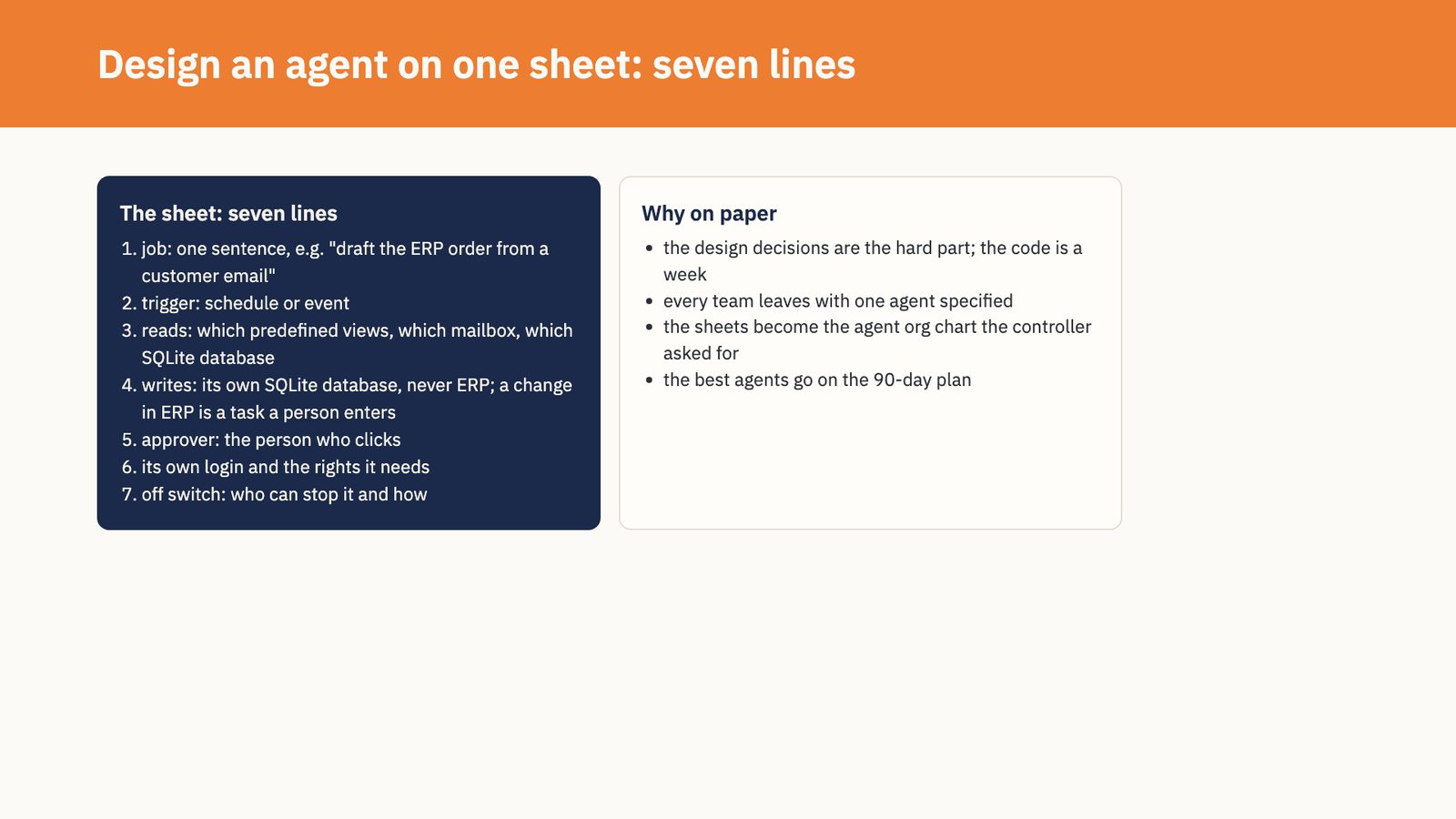
Tools that prepare actions as well as answers, with clear limits on autonomy and a named person approving what matters.
- 05
Lead generation and sales pipeline
Prospect research and enrichment, lead scoring, and pipeline management and forecasting connected to your CRM, so sales teams spend their time on the right conversations.
- 06
Dashboards and reporting
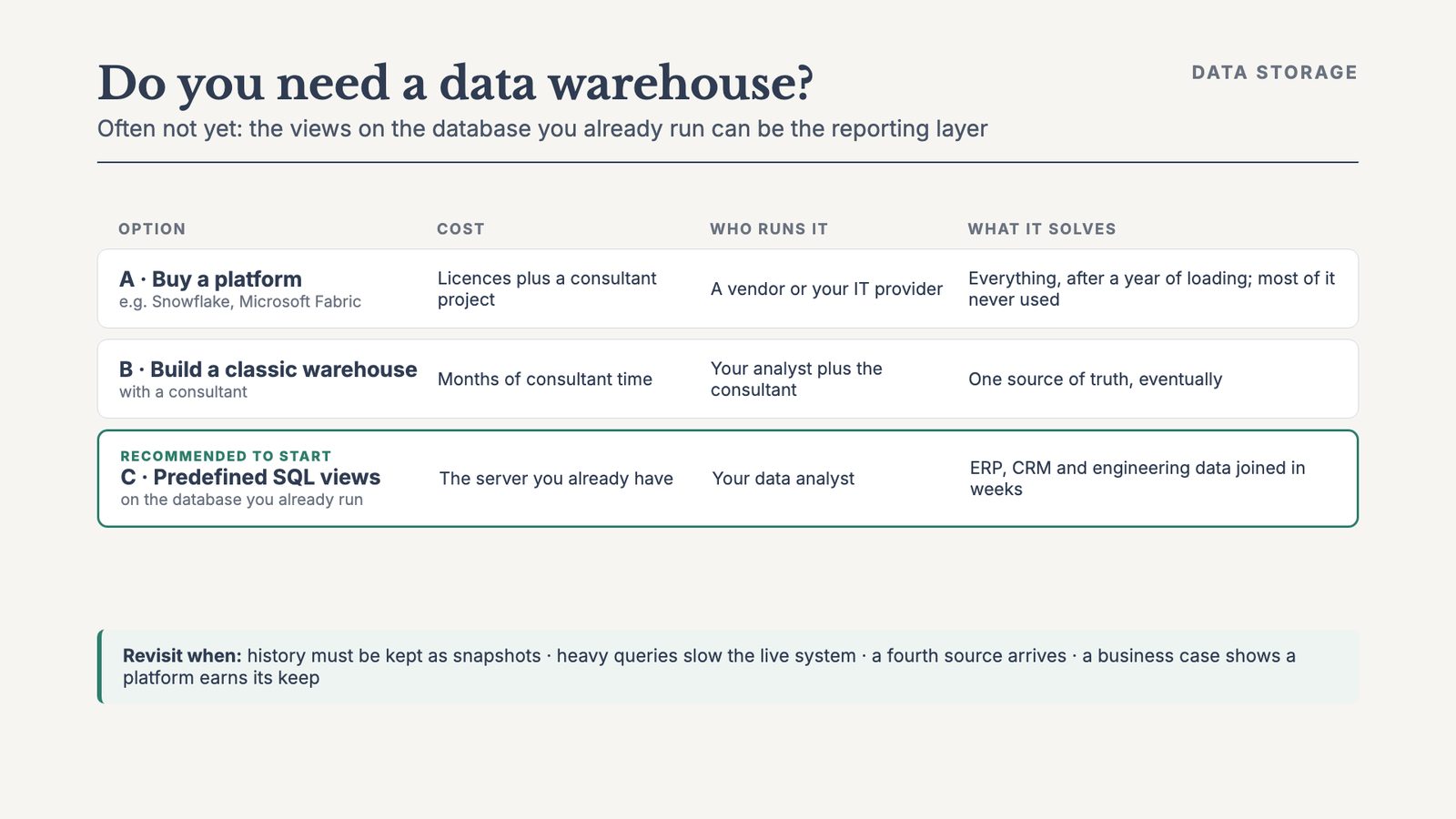
Reporting and analysis built on approved, read-only views of your data.
- 07
Integrations with your core systems
Connections to ERP, CRM, configurators and files that leave those systems unchanged.
Proof
AI in production, not in a slide deck.
-
Brintons · Manufacturing
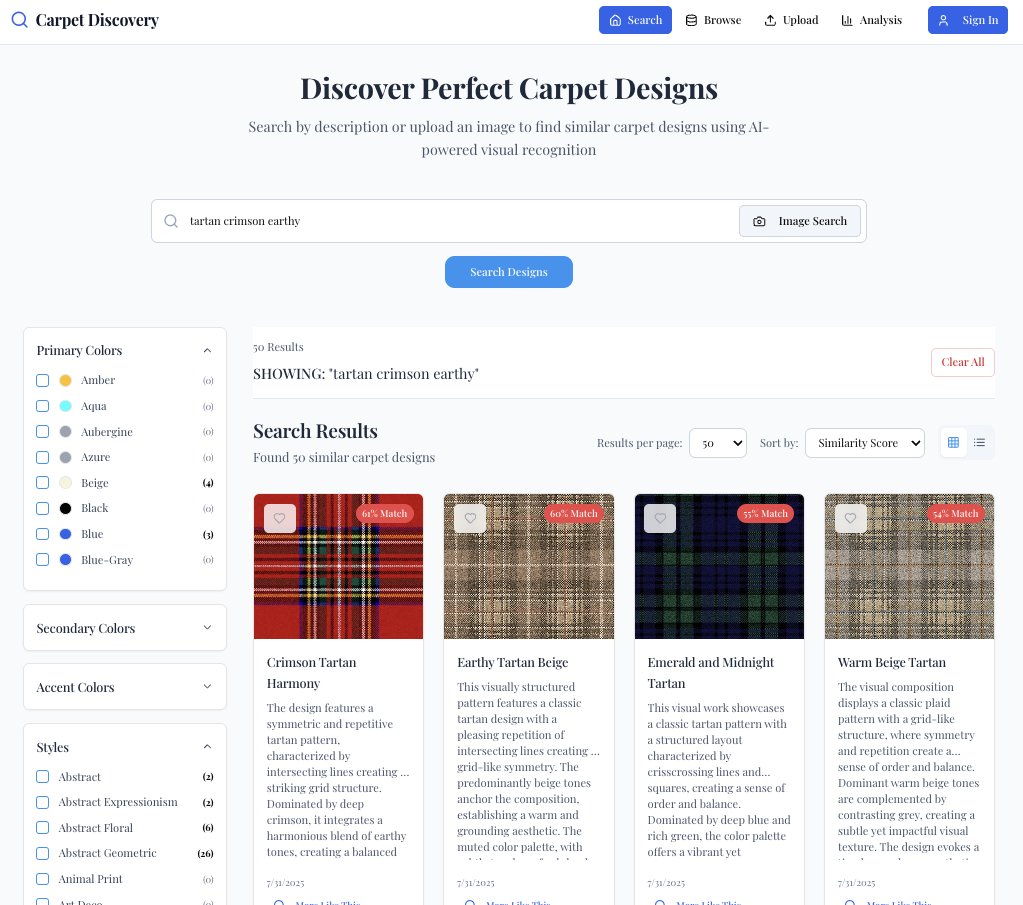
AI search across a 200-year design archive
For Brintons, more than 40,000 designs tagged automatically for style, motif, geometry and colour, searchable by written brief, image or mood board. Live in Brintons’ Design Studio Online since March 2026 and used daily by design teams in the US and Europe. Built on PatternMatch.ai.
-
ORtelligence · Healthcare
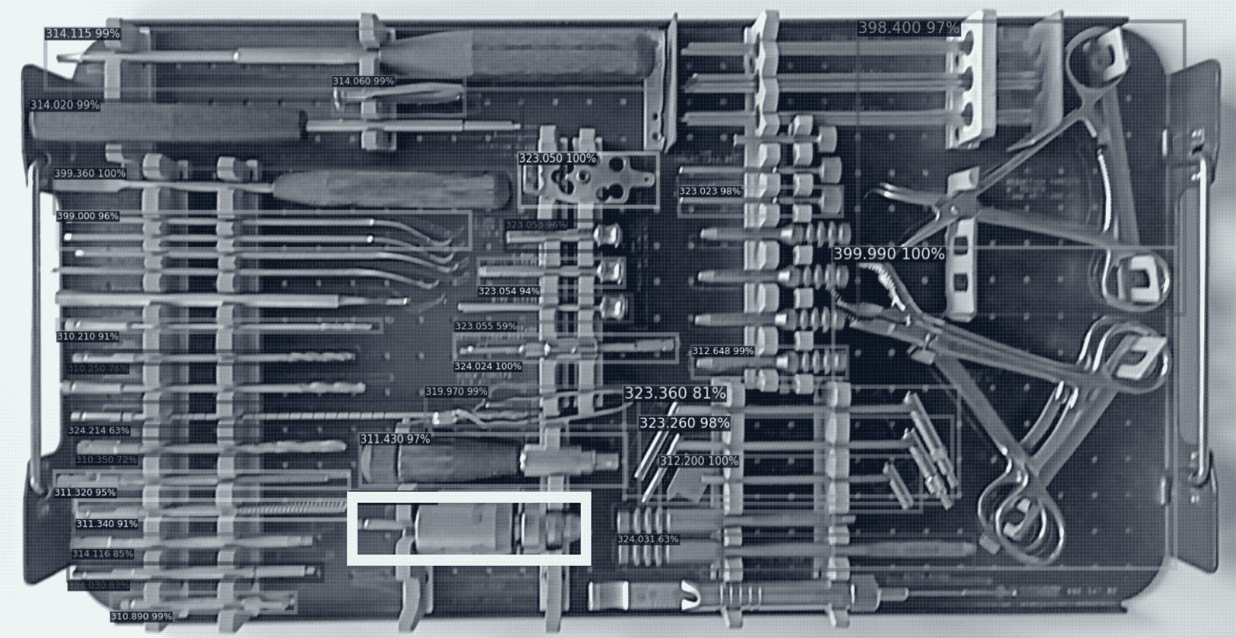
Computer vision for surgical trays
For ORtelligence, we led the technology for a phone app that photographs a surgical tray, recognises every item and flags what is missing.
-
Salus AI · US healthcare
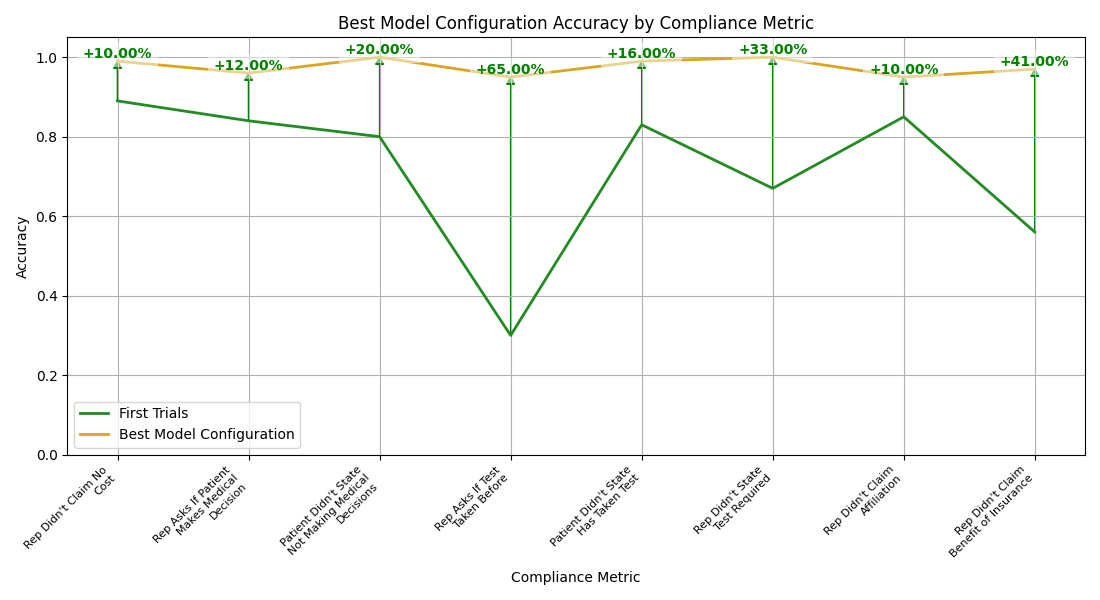
AI call compliance for medical sales
For Salus AI, every outbound sales call transcribed and checked against federal and state rules. We designed the rules engine and moved it to large language models, raising accuracy from about 80% to 95–98% and cutting model cost by up to 80%.
How we build
What we have learned building AI in operational businesses.
The same principles we teach in our technical workshops apply to everything we ship.
- 01
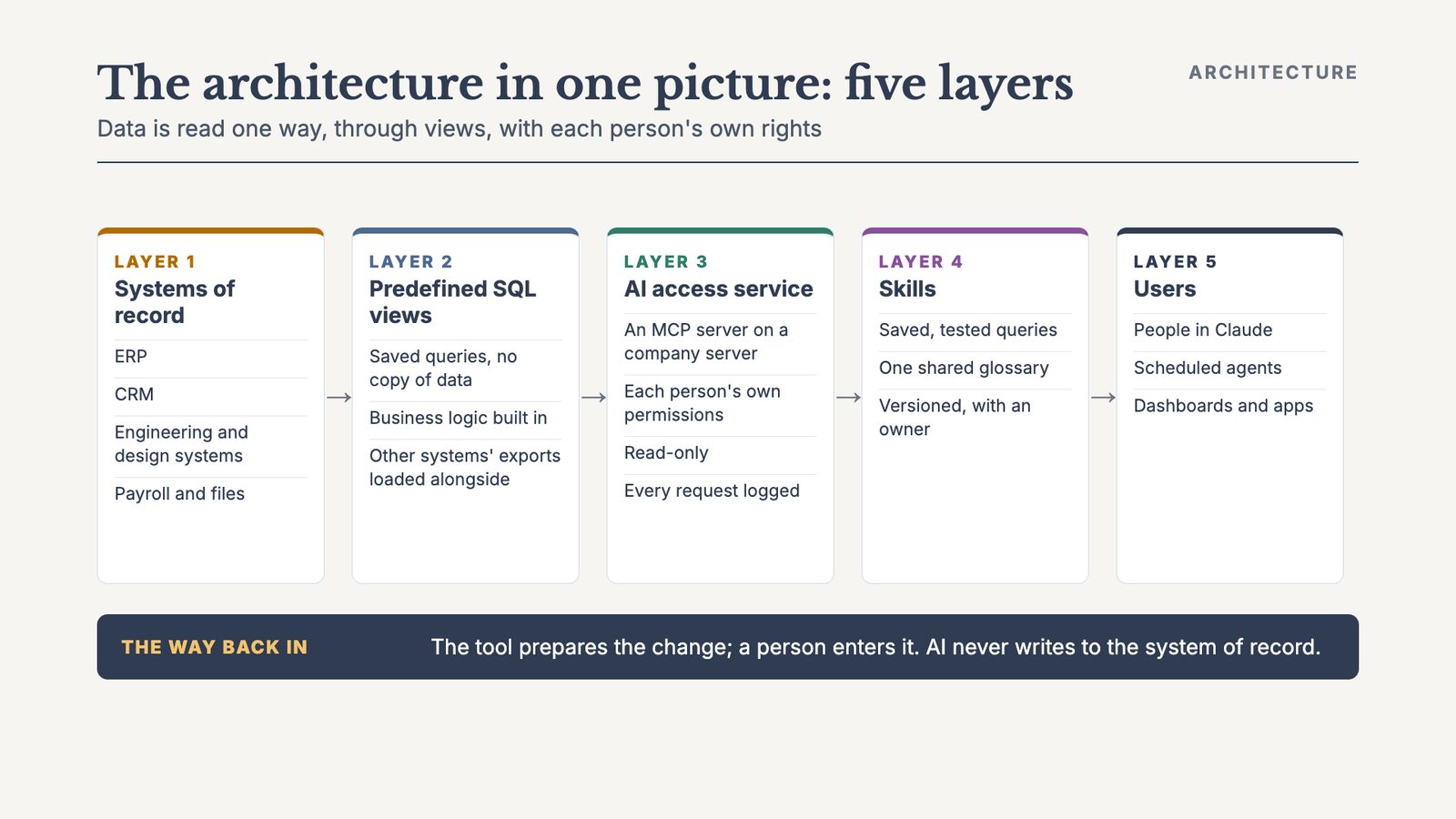
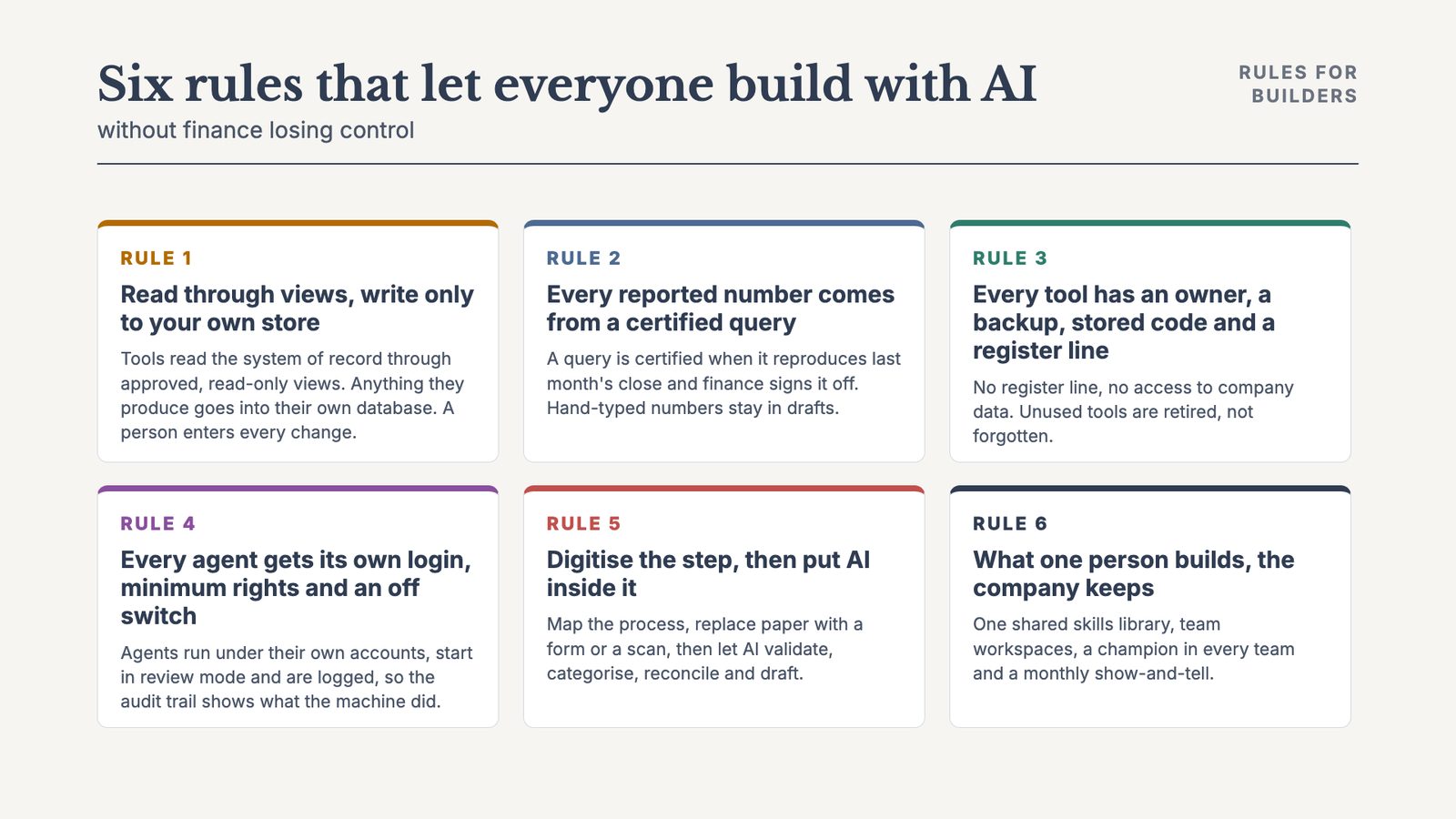
Permissions belong in the infrastructure, not in the prompt
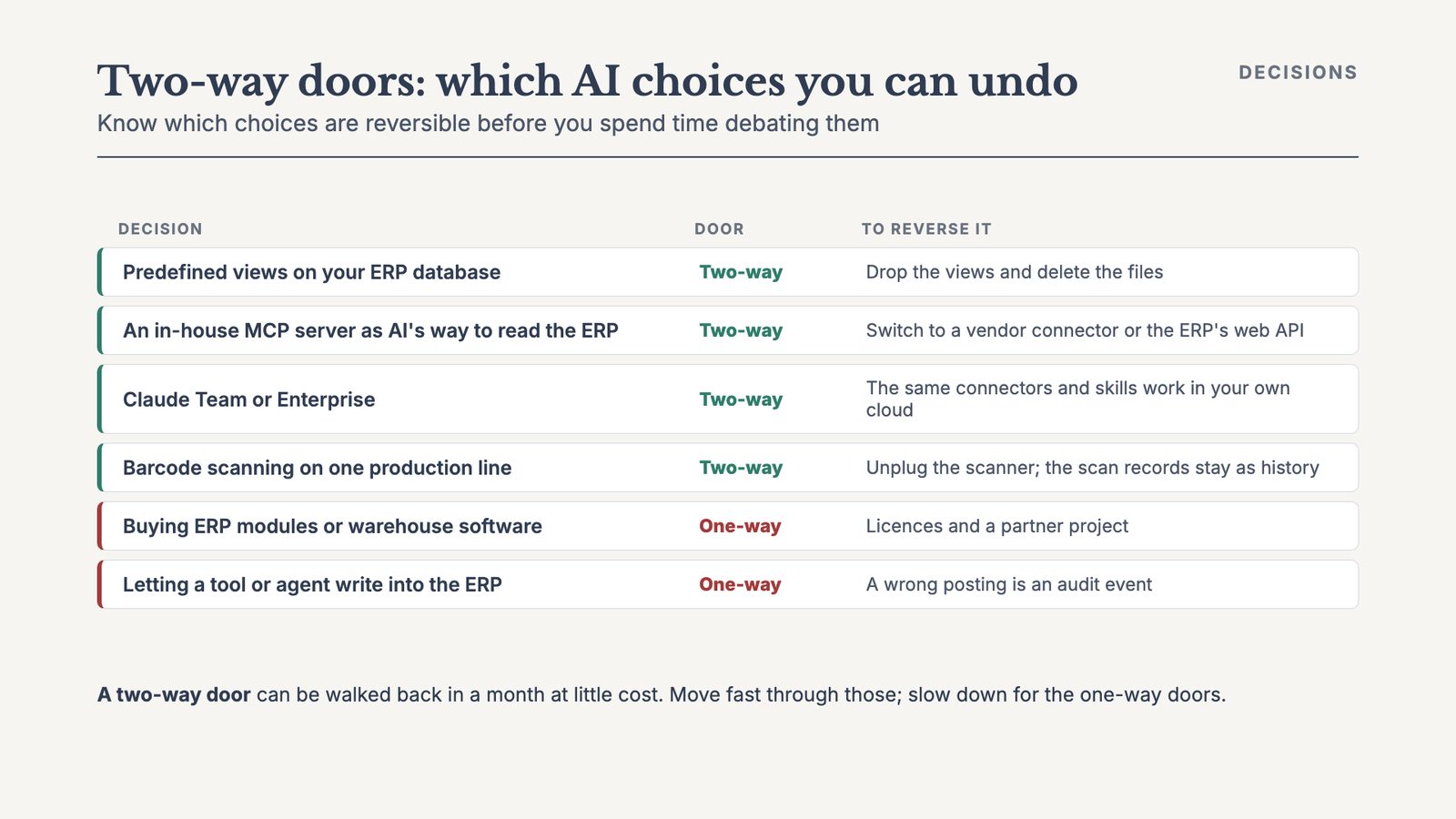
Every request carries the user’s own credentials, so the AI can only see what that person is allowed to see.
- 02
Your core systems stay exactly as they are
AI reads your data through documented, read-only views that a data owner has approved.
- 03
Prepare and approve
When a tool writes back to a core system, it drafts the change and a named person approves it.
- 04
Every tool has a named owner
An owner, a backup, a register entry and a README for handover.
- 05
Running costs designed in
Good engineering keeps usage costs down, for example by processing documents once rather than re-reading them on every question.
- 06
We stay to make it work
We host, monitor and support what we build, and improve it as your feedback comes in.
Where to start
Have a problem like these?
How we design
The blueprints behind every build.
Our services
One team, from the first workshop to the system in production.
AI strategy & roadmap →
Readiness review, scored use cases and a 30/60/90-day plan the board can back.
AI training & education →
Leadership briefings, hands-on tool training for staff and technical workshops.
AI adoption & governance →
Change management that makes AI stick, and proportionate governance that keeps it safe.